factBi-temporal knowledge
Facts keep valid-time and transaction-time history, so agents can ask what is true now and what changed earlier.
Ferrosa Memory gives AI agents typed recall: facts with history, plans, skills, graph edges, context folds, and auditable forgetting on a self-hosted MCP service.

Most agent memory products stop at text chunks and vector similarity. Ferrosa Memory treats memory as operational data that can be linked, queried, corrected, explained, and removed.
factFacts keep valid-time and transaction-time history, so agents can ask what is true now and what changed earlier.
graphPeople, projects, skills, sessions, documents, and tools are connected with typed edges instead of buried in prose.
recallRecall blends lexical, vector, phonetic, graph, workspace, recency, and feedback signals before returning evidence.
forgetPreview the blast radius, retract reversibly, or hard-delete with an append-only journal for trust and compliance work.
mcpExpose a focused default toolset for daily work, with advanced graph, fold, Datalog, and operator tools when needed.
Ferrosa Memory unifies facts, plans, traces, relationships, and context under a single durable service.
Forge is the action layer: task plans, operator approvals, and automation paths that should survive beyond a single chat window.
Loom frames sessions, documents, and agent trajectories as threads that can be folded without losing provenance.
The database and operations layer: S3-backed durability, indexes, graph storage, and infrastructure you can run.
Typed memory units, structured recall paths, and inspectable relationships between every fact, plan, and session.
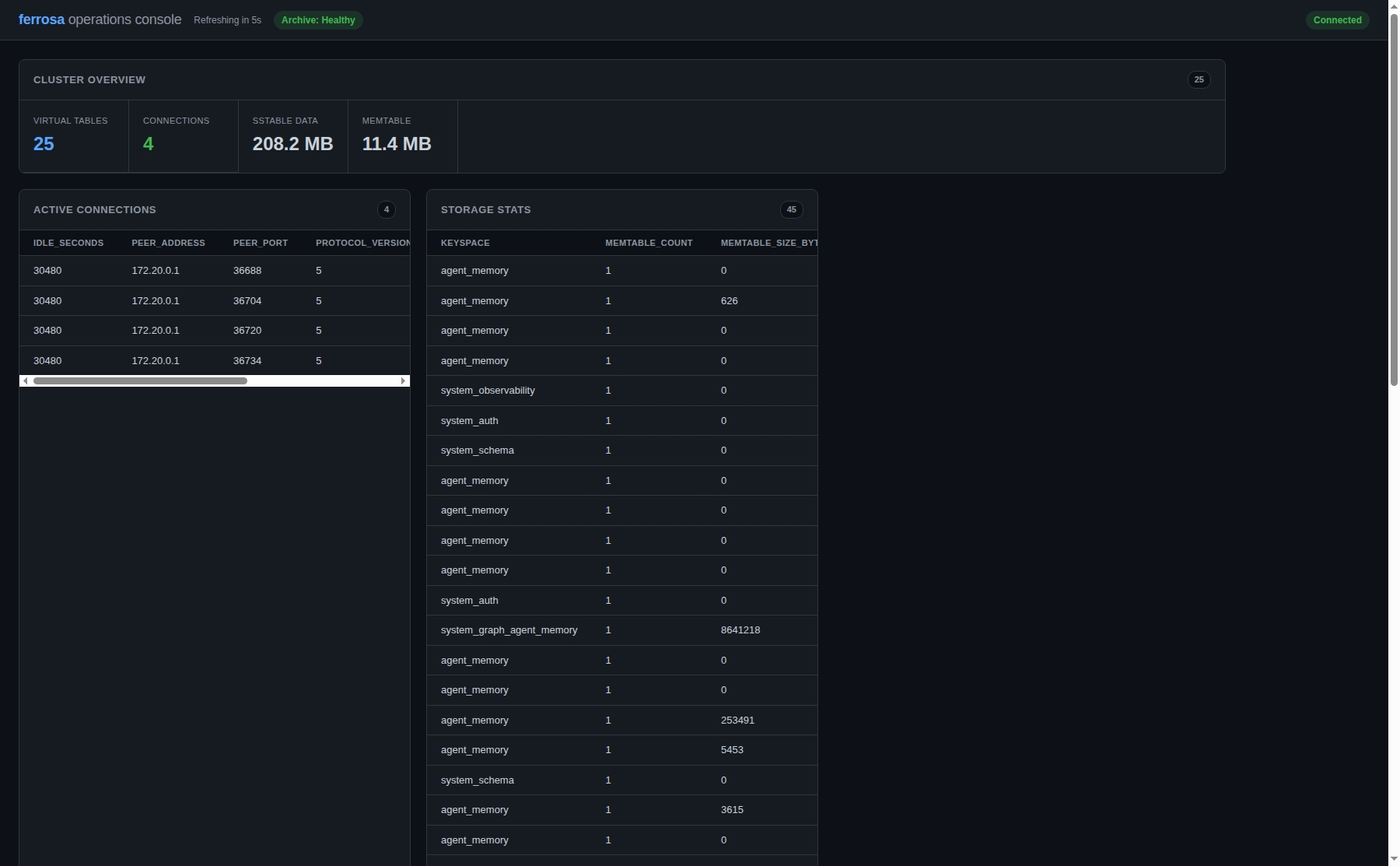
Ferrosa Memory should feel like a real systems product: workbench, graph visualization, operations view, local setup, and clear comparison pages.
Run local first, point your MCP client at the server, then decide whether your team needs a shared host or a Ferrosa-backed cluster.
$ curl -fsSL https://ferrosa-memory.com/setup-memory.sh | bash

$ ferrosa-memory serve
listening on 127.0.0.1:18765
mcp tools ready